
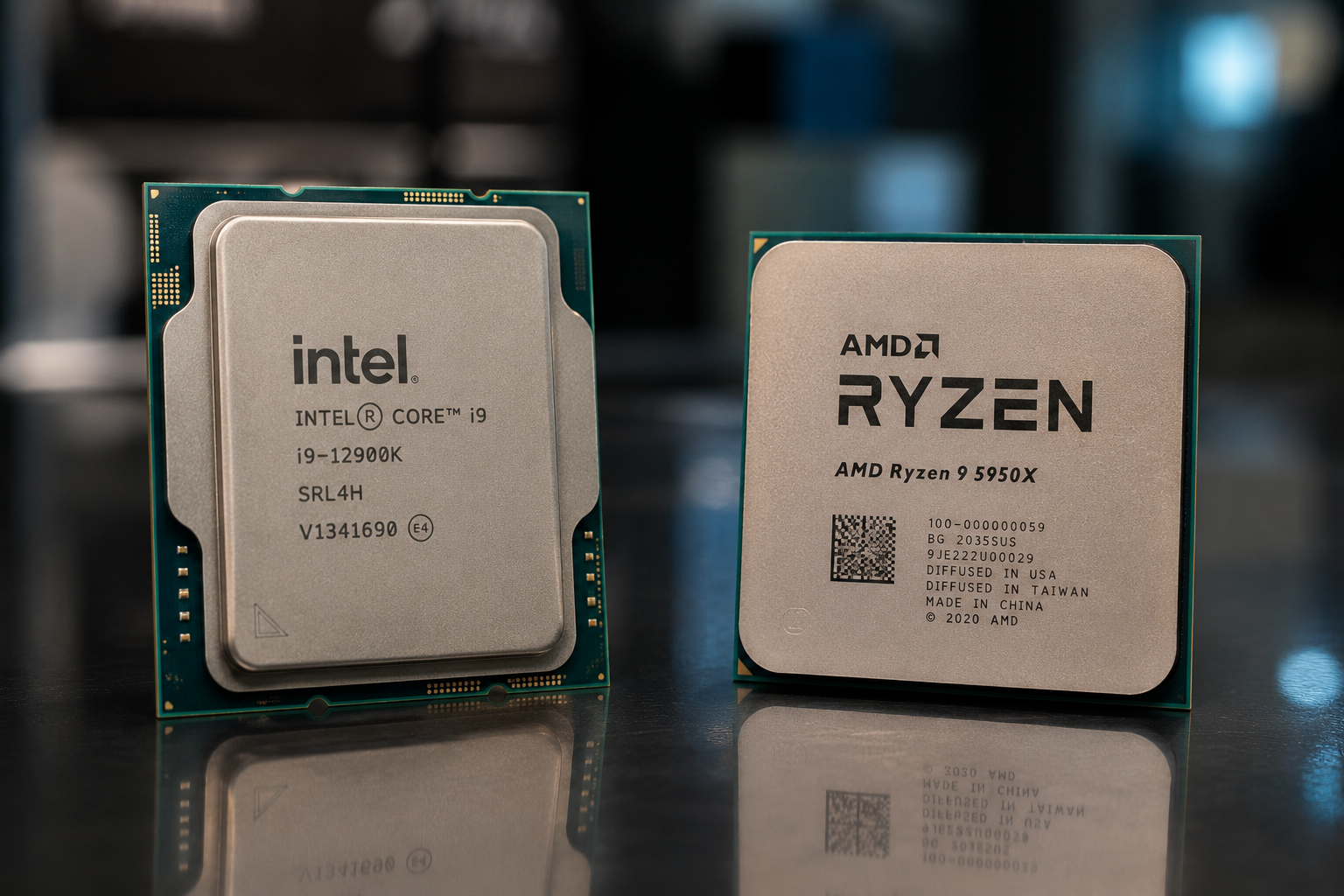
Intel and AMD stocks jumped on Wednesday as investors responded to developments across the semiconductor industry, from a potential US memory manufacturing deal involving Intel to upbeat forecasts for long-term chip demand and a positive update on AMD’s product ramps.
Intel stock INTC rose about 4.5% after Reuters reported that South Korean memory-chip maker SK Hynix was in talks with Intel over a potential arrangement that could see it manufacture memory chips on US soil for the first time.
Advanced Micro Devices stock also surged about 4%, extending its recent rebound after Piper Sandler reaffirmed its bullish view of the chipmaker.
Broader optimism around semiconductor demand added another layer of support for both stocks, with Bank of America analyst Vivek Arya forecasting a sharp expansion in the industry’s addressable market over the coming years.
SK Hynix weighs US memory production
Under one potential scenario, SK Hynix could lease part of Intel’s long-planned chipmaking facility in Ohio, according to three people familiar with the discussions cited by Reuters.
Another possibility would involve SK Hynix forming a venture with Intel and major cloud companies seeking to secure long-term memory-chip supplies, two of the people said.
For Intel, such an arrangement could provide a boost to its manufacturing business at a time when the company is working to rebuild its position in the semiconductor industry.
It could also represent a significant development for the Trump administration, which has pushed chipmakers to expand manufacturing in the US as surging investment in artificial intelligence and data centres drives demand for semiconductor components.
However, potential opposition from the South Korean government could complicate any agreement, according to Reuters sources.
SK Hynix said it is “reviewing various measures, including establishing additional production bases, to strengthen the competitiveness of its memory business,” but added that “no matters have been determined at this stage.”
“We would like to clarify that nothing has been finalized regarding cooperation with any specific companies mentioned in the article or memory chip production in the United States,” it added.
BofA sees semiconductor market reaching $3.2 trillion
Investor concerns over a potential slowdown in AI spending have recently weighed on chip stocks, particularly amid questions over whether companies such as Anthropic and OpenAI could reduce hardware purchases if they slow the development and training of large language models.
Bank of America analyst Vivek Arya sees limited evidence of such a deterioration in the near term.
Arya expects the total addressable market for the semiconductor industry to reach $3.2 trillion by 2030, compared with an estimated $1.7 trillion this year, according to MarketWatch.
Memory chips and data-centre demand are expected to be among the principal drivers of that expansion, alongside recoveries in automotive and industrial semiconductor demand.
The analyst said there were “no signs of slowing” in customer orders, long-term agreements, supply commitments and chip pricing despite recent market volatility.
Arya also expects “a brighter outlook” for traditional and AI server manufacturers as demand for computing infrastructure continues to expand.
Once semiconductor momentum strengthens, he expects Micron Technology, Intel and equipment makers Lam Research and Applied Materials to lead the sector.
AMD gains as product ramps remain on track
AMD shares added another 4% as investors responded to a positive assessment from Piper Sandler following the chipmaker’s third-quarter pre-quiet period call held on Tuesday.
Piper Sandler reiterated an Overweight rating and a $600 price target on AMD.
Analyst David O’Connor said the overall message from AMD’s investor relations team was reassuring, with the company’s CPU and GPU product ramps progressing as planned.
O’Connor indicated that demand continues to exceed available supply.
He also said current supply capacity appears sufficient to support AMD’s existing guidance, while leaving room for the company to potentially outperform expectations.
The Piper Sandler discussion covered several key components of AMD’s growth strategy, including the Helios server ramp-up, Venice CPUs, Optics scale-up architecture, high-bandwidth memory supply and broader memory dynamics.
The note also addressed margins, client computing and gaming, with the programs described as remaining on track and supply positioned to support the company’s guidance.
The post Why are Intel and AMD stocks rising on Wednesday? appeared first on Invezz
