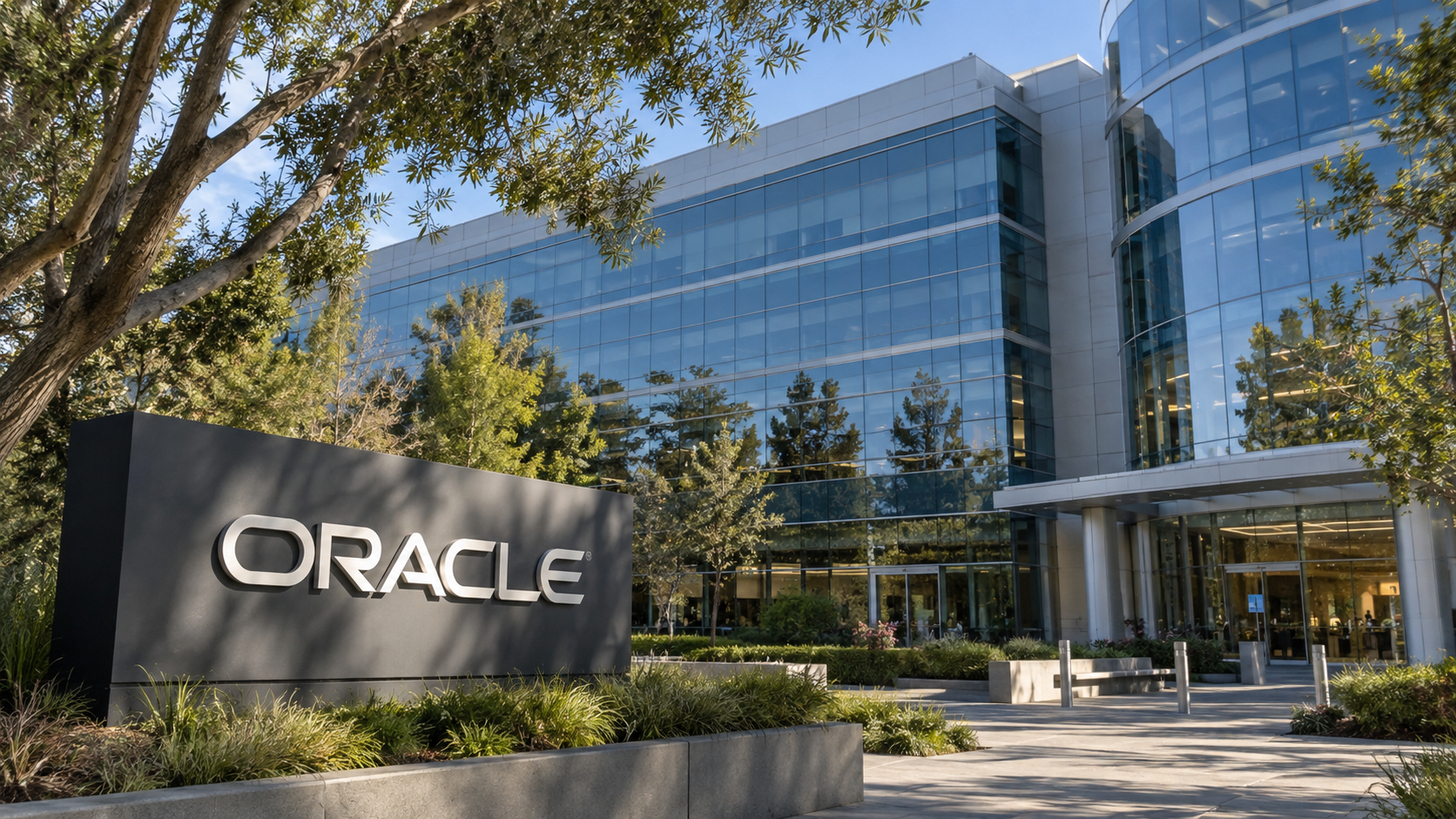
Oracle shares ORCL fell nearly 6% on Monday after the software giant disclosed plans to raise $20 billion through bond and share sales, highlighting the growing financing requirements of its artificial intelligence and cloud infrastructure expansion.
Regulatory filings showed that the company intends to use the proceeds for general corporate purposes, including capital expenditure, debt repayment, acquisitions, dividends and share buybacks.
The fundraising comes as Oracle steps up investments in AI infrastructure and pursues an ambitious target of more than tripling its revenue by fiscal 2030.
The company said last week that capital spending would peak during the current fiscal year and the next, while committing to raise no more than $20 billion in additional financing for AI through fiscal 2030.
Oracle had $125.34 billion in notes payable and other borrowings as of August 31, compared with revenue of $67.36 billion in fiscal 2026.
It expects revenue to exceed $225 billion and adjusted earnings to surpass $21 per share by fiscal 2030.
Oracle’s AI spending and debt burden draw scrutiny
The planned bond offering comprises six tranches maturing between 2029 and 2046.
These include one floating-rate tranche and five fixed-rate tranches.
The company has not yet determined the interest rates, offering prices, or number of shares to be issued.
Investors have become increasingly focused on Oracle’s ability to generate adequate returns from its AI investments, particularly as it carries a substantial debt burden and competes with larger cloud infrastructure providers such as Microsoft and Amazon.
The company also has significant exposure to OpenAI, the loss-making developer of ChatGPT, adding another layer of uncertainty around the potential returns from its AI infrastructure commitments.
Oracle shares have fallen 61% from their peak closing level in September 2025, reflecting concerns about the scale of its capital expenditure, financing requirements and ability to convert its investments into sustainable cash flows.
However, the company offered a more optimistic outlook at last week’s investor day.
It indicated that it expects to generate positive free cash flow during the second half of the fiscal year ending next May.
That would mark an improvement over analyst expectations, which had pointed to negative free cash flow as capital expenditure and operating costs were expected to exceed cash generated from business operations.
Wells Fargo flags uncertainty over financing needs
The financing outlook remains a key concern for analysts.
Wells Fargo last week lowered its price target on Oracle stock to $250 from $280 while maintaining an Overweight rating.
The revised target still implies approximately 100% upside from Monday’s trading levels.
The brokerage acknowledged Oracle’s expanding AI opportunity but highlighted continued scrutiny over its ability to meet fiscal 2030 financial targets.
It expects greater clarity on execution, capital expenditure requirements, and financing needs.
Wells Fargo also pointed to the growing contribution of bring-your-own-hyperscaler arrangements and customer prepayments to Oracle’s remaining performance obligations.
These arrangements are becoming increasingly important as investors assess how AI infrastructure companies fund their expansion.
Recent pressure on CoreWeave, whose debt yields have climbed above 15% and credit default swaps have reached record levels, has intensified concerns about financing risks across the sector.
Wells Fargo said its capacity-driven capital expenditure forecasts differ significantly from broader market estimates beyond fiscal 2027, highlighting limited visibility into the scale of Oracle’s infrastructure expansion.
The brokerage is looking for further details on medium-term capital expenditure, the mix of bring-your-own-hyperscaler arrangements, customer prepayments and external funding.
Greater clarity on these factors could help investors assess whether Oracle can finance its ambitious expansion while maintaining financial discipline and delivering the returns expected from its AI investments.
The post Why is Oracle stock falling nearly 6% on Monday? appeared first on Invezz
