
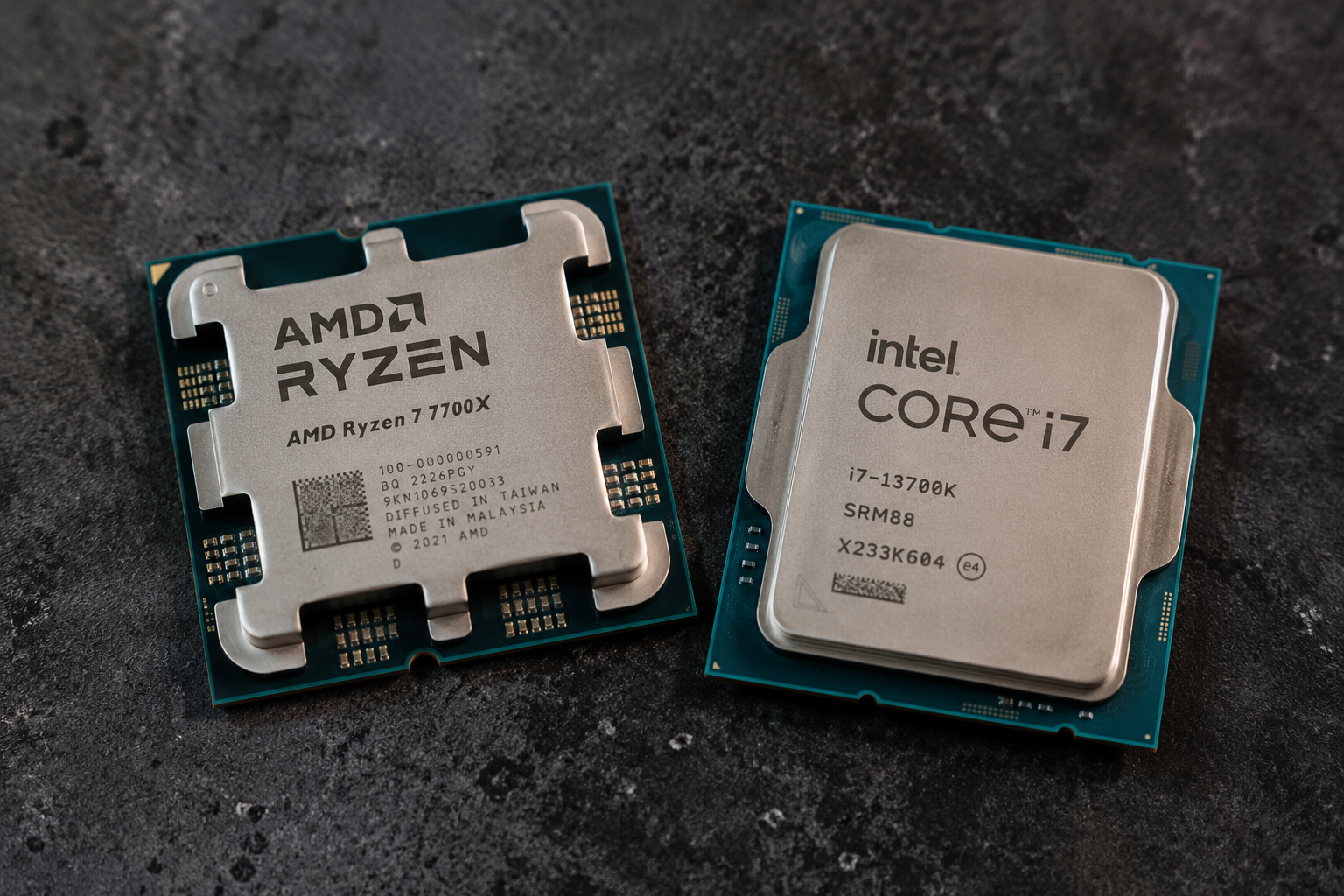
Intel and Advanced Micro Devices shares fell on Wednesday as semiconductor stocks extended their losing streak, with concerns about elevated valuations, rising financing costs and Chinese competition weighing on the sector.
The declines continued despite strong results and improved guidance from chipmaking equipment supplier ASML.
Intel stock fell around 3.3%, while AMD dropped 4.64%. Marvell Technology also declined more than 6.2% in trading.
The iShares Semiconductor ETF (SOXX) fell for a sixth consecutive session and was on course to extend its losing streak to seven days, marking its longest such run since May 2025.
Semiconductor stocks extend losing streak despite ASML results
ASML raised its guidance on Wednesday and reported strong demand for its chipmaking equipment, with customers looking to place orders as far ahead as 2030.
The results provided evidence that demand linked to artificial intelligence could remain strong for several years.
However, the positive outlook did little to support semiconductor stocks.
ASML supplies equipment used to manufacture chips, meaning its results do not necessarily translate into immediate demand growth for chipmakers such as Intel and AMD.
Those companies need sustained orders from their own customers, particularly large cloud computing and AI infrastructure providers, to support further revenue growth.
Strong demand for ASML’s equipment could also give the company greater scope to increase prices, potentially raising costs for major customers, including Taiwan Semiconductor Manufacturing Company and Intel.
The semiconductor sell-off has spread across the industry amid concerns that valuations have become stretched following the AI-driven rally.
Rising financing costs and increased competition from Chinese chipmakers have added to the pressure.
Analysts remain divided on the AI hardware outlook
Despite the recent declines, some market analysts continue to see opportunities in semiconductor stocks.
Neil Sethi, managing partner of Sethi Associates, said in a Seeking Alpha report that the latest pullback could be a temporary pause before the sector’s upward trend resumes.
Andreas Steno Larsen, chief investment officer of Steno Global Macro Invest and founder of Steno Research, also expressed a bullish view of AI hardware stocks, arguing that the case for remaining bearish on the sector was particularly weak.
Steno Research has highlighted South Korean exports as an indicator of semiconductor industry performance.
According to the firm, a gap of more than 150% between the export indicator and semiconductor stocks could signal scope for an upward move in the sector.
However, the recent weakness suggests investors remain cautious about how much future AI demand is already reflected in chipmakers’ valuations.
The sector’s performance will depend partly on whether demand from major technology companies continues to support revenue growth and justify existing valuations.
Historical data offers a more positive signal
Historical data cited by Bluekurtic Market Insights also suggests that consecutive declines in the semiconductor ETF have not always signalled a prolonged downturn.
According to the firm, when SOXX had fallen for six consecutive trading sessions in previous instances, the ETF was higher three months later in 16 of 17 cases. The median gain over that period was 11%.
Bluekurtic analysts described the pattern as a potentially positive signal for the broader S&P 500 in the fourth quarter.
However, historical performance does not guarantee a similar outcome this time.
Semiconductor stocks remain sensitive to AI spending expectations, funding conditions, and competition, leaving investors to assess whether the latest decline represents a temporary correction or a more sustained change in market sentiment.
The post Intel, AMD stocks fall as chip sell-off deepens appeared first on Invezz
