
Oil’s return above $100 a barrel has made airline investing a tougher proposition.
As of writing, US crude sits comfortably above $100 while Brent is hovering around $114 as Middle East supply concerns intensify.
For air carriers, the challenge extends beyond crude – jet fuel prices and the ability to recover costs through fares ultimately determine profitability.
Against the current backdrop, Delta Air Lines, Ryanair, and United Airlines remain worth owning heading into 2027. Here’s what makes these airline stocks attractive despite elevated oil prices.
Delta Air Lines: a refinery provides an unusual buffer
Delta Air Lines offers something most airline stocks cannot – a refinery business that can partially offset the cost of turning crude into aviation fuel.
Its December-quarter outlook incorporates a refinery benefit of about 40 cents per gallon, bringing projected all-in fuel costs to about $4.25.
That provides a tangible cushion when jet fuel becomes particularly expensive relative to crude.
The September quarter demonstrated resilience. DAL generated $1.72 in adjusted earnings a share and a 9.4% adjusted operating margin.
Management still projects roughly $2.5 billion in full-year free cash flow.
That combination makes Delta Air Lines stock a compelling pick – it has both an operating buffer and cash generation to support its finances through the squeeze.
However, the refinery cannot neutralize every increase. Delta reduced its annual adjusted earnings forecast to $5.10–$5.60 per share, underscoring that resilience still comes with pressure on profits.
United Airlines: customers are helping absorb the fuel shock
United Airlines earns its place through demonstrated sales strength across several customer groups.
Q3 revenue increased 17% to a record $17.9 billion, while revenue per available seat mile climbed 16%. Premium revenue rose 17%, contracted business revenue advanced 26%, and cargo revenue increased 23%.
Despite a 62% jump in fuel expense, United delivered adjusted earnings of $2.54 per share, within its guidance.
Those figures support the investment case: UAL has multiple sources of additional revenue to help absorb expensive fuel.
It offers more ways to recover costs than a carrier dependent mostly on filling seats with discounted tickets.
Its outlook also explicitly allows for substantial fuel pressure.
United Airlines projects Q4 adjusted earnings of $0.50–$1.50 per share while assuming fuel costs of approximately $4.80 per gallon.
That leaves it exposed to further increases, but demonstrates a path to profitability under demanding assumptions.
Ryanair: fuel hedges buy valuable breathing room
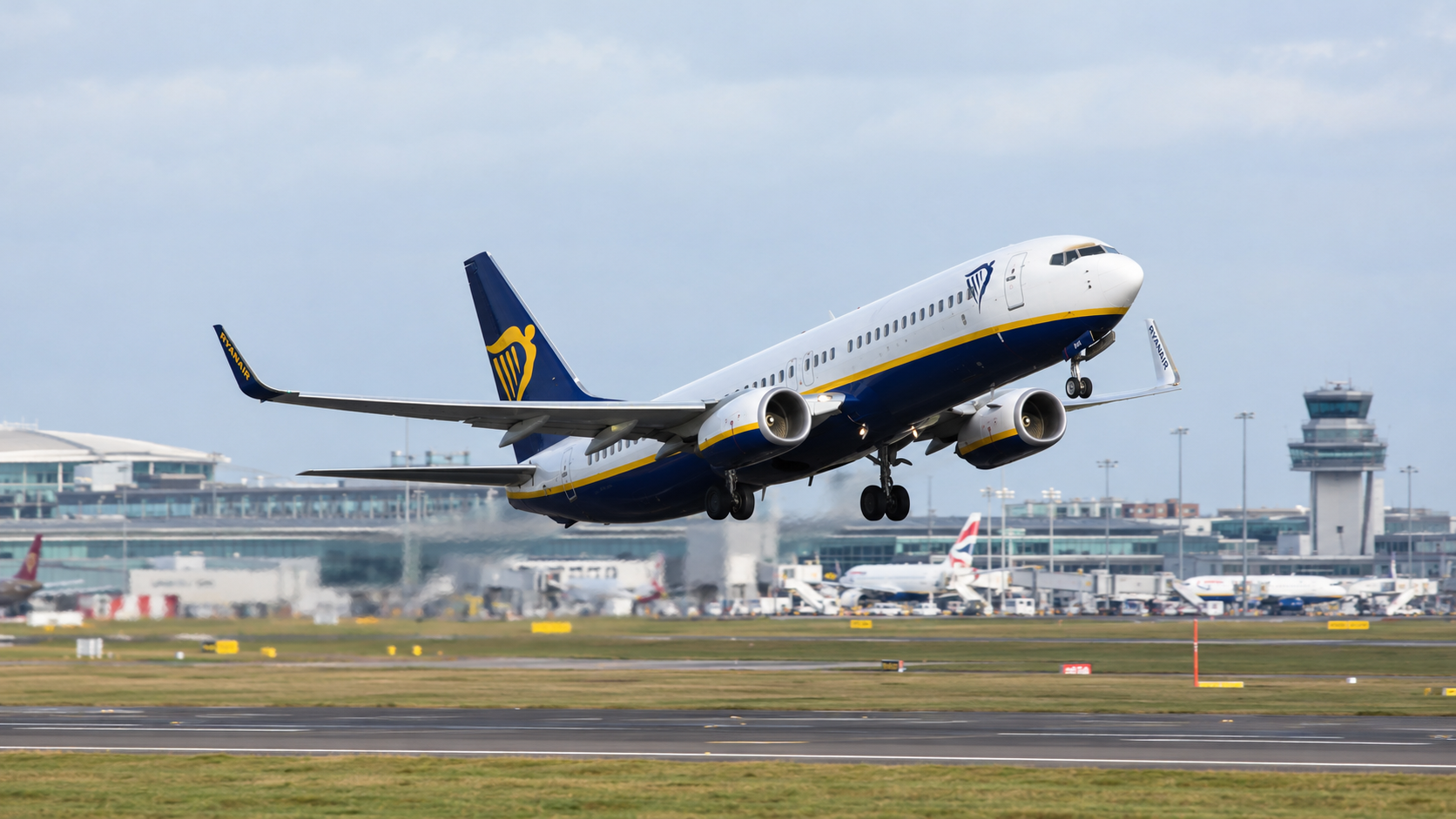
Ryanair provides the most direct near-term protection of these three picks through its fuel hedges.
The European budget carrier has reported roughly 80% of its jet fuel requirements hedged through March 2027 at around $67 per barrel.
It has also reduced its fiscal-year passenger target to 214 million from 216 million and plans broadly flat winter capacity, limiting exposure to costly unhedged fuel.
That combination is the attraction: contracted fuel protection and a willingness to sacrifice growth when additional flying becomes less attractive.
Against less-hedged competitors, Ryanair has more breathing room to protect profitability.
The investment case becomes harder after March. CEO Michael O’Leary said on October 20 that only 15% of the following year’s fuel costs were secured at $85 per barrel.
He expects sharply higher European fares as industry costs rise.
Investors should therefore treat Ryanair’s current hedge advantage as time to adapt, with future returns depending on pricing and capacity discipline.
The post These airline stocks remain worth owning despite $100 oil appeared first on Invezz
