
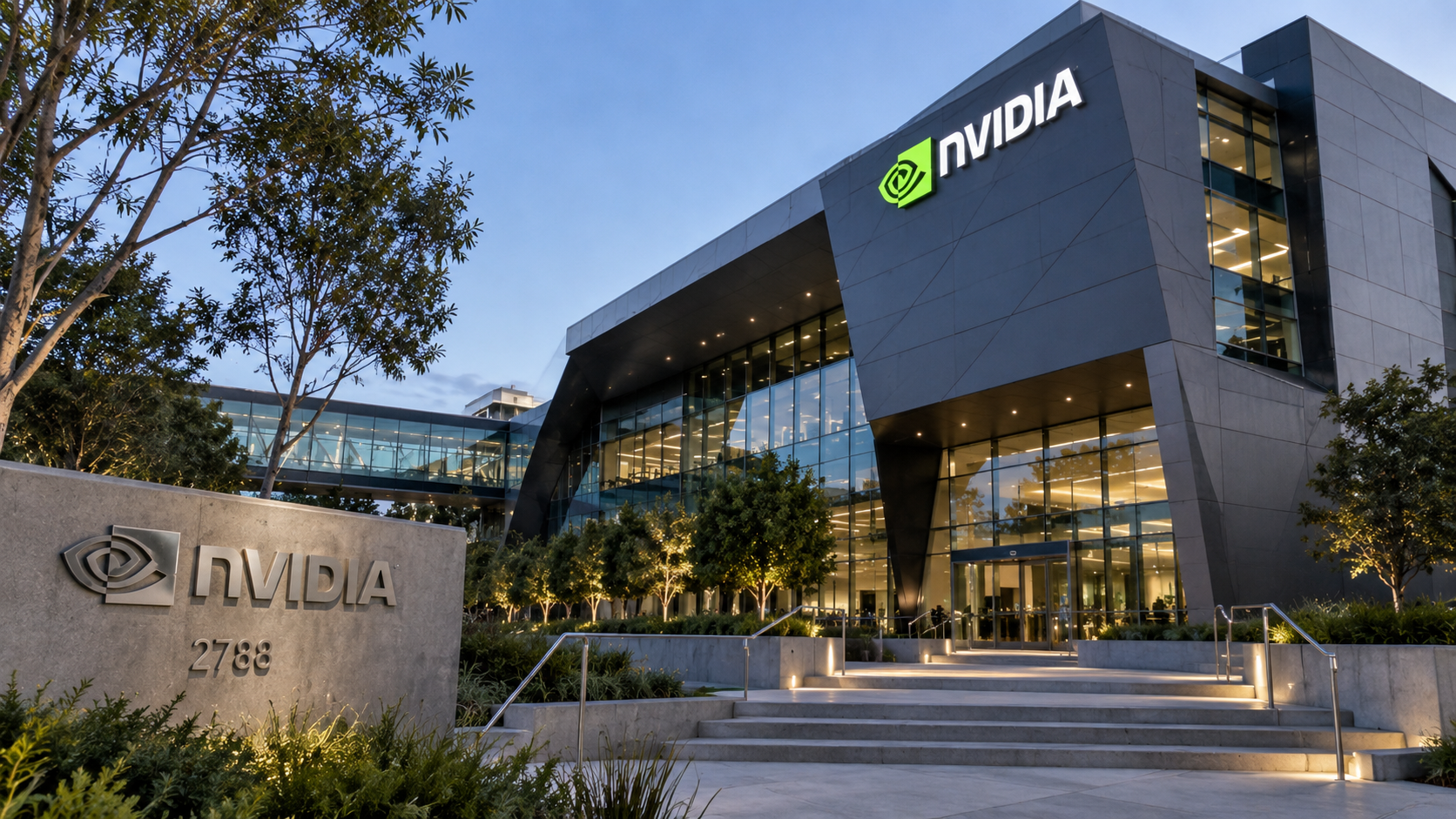
Nvidia stock NVDA traded down 0.2% on Friday after falling 4.4% in the previous session, as investors weighed contrasting views on the chipmaker’s long-term prospects.
Seaport Research Partners reiterated a bearish rating, citing competitive pressures and financial commitments, while Laffer Tengler Investments CEO Nancy Tengler argued that Nvidia could still double in value over the next five to 10 years, even if earnings growth slows.
Jay Goldberg, an analyst at Seaport Research Partners, maintained a Sell rating and a $180 price target, below Nvidia’s Thursday closing price of $212.
He acknowledged that the company was positioned to deliver record sales in the near term but warned that challenges could become more significant over the following year.
Nvidia’s shares have climbed sharply in recent years, making it the world’s most valuable publicly traded company.
However, concerns about the sustainability of artificial intelligence spending have recently weighed on chipmakers and other AI-linked stocks.
Seaport flags competition and financial commitments
Goldberg identified four main risks to Nvidia’s outlook, including data centre construction constraints, financial commitments, circular financing and tensions involving smaller cloud infrastructure providers.
Although around 55 gigawatts of data centre capacity has been announced for the coming year, Goldberg said the industry may struggle to build more than 30 gigawatts because of shortages of electricians, gas turbines and utility connections.
He also warned that Nvidia’s commitments to securing its supply chain and supporting data centre construction total about $250 billion.
That figure excludes obligations connected to a funding initiative being developed with Wall Street, which Goldberg said could expand from $500 billion to $1 trillion.
Nvidia has the financial capacity to support these commitments, according to Goldberg, who expects operating cash flow to reach $200 billion this year.
However, he argued that such obligations could amplify the impact of a downturn.
Goldberg also raised concerns about Nvidia investing in and lending money to suppliers and customers.
He said credit guarantees and other financial support could effectively reduce customers’ costs, raising questions about underlying demand and competitive pressures.
Neocloud exposure creates strategic tension
Goldberg highlighted Nvidia’s relationship with neocloud providers such as CoreWeave and Nebius, which offer computing capacity as a service.
He argued that Nvidia benefits from having numerous smaller customers rather than relying on a few large cloud providers with greater bargaining power.
However, those smaller companies have taken on substantial debt amid uncertainty about the profitability of AI infrastructure.
“If the neoclouds fail to lift off, that doubles back on Nvidia with reduced sales and even more reduced margins,” Goldberg said.
He acknowledged that Nvidia could continue benefiting from strong demand in the near term, adding that the longer-term risks could take time to materialise.
Tengler sees room for further growth
Tengler offered a more optimistic view, arguing that Nvidia could double over five to 10 years even if earnings growth eventually slows to 20% or 30%.
She cited earnings growth of 96% and said she expected it to decelerate to 70% the following year before potentially settling at a slower pace.
These figures represent her outlook rather than company guidance.
Tengler compared Nvidia’s potential trajectory with Microsoft’s Azure cloud business, saying slower growth had not prevented the business from supporting the stock’s performance.
She also said Nvidia traded at a 13.5 earnings multiple when her firm added it to its value portfolio earlier in the summer.
That valuation reference was historical, not current.
The post Why Nvidia stock is in red today: growth case meets bearish warning appeared first on Invezz
